The reasons for oil at negative price
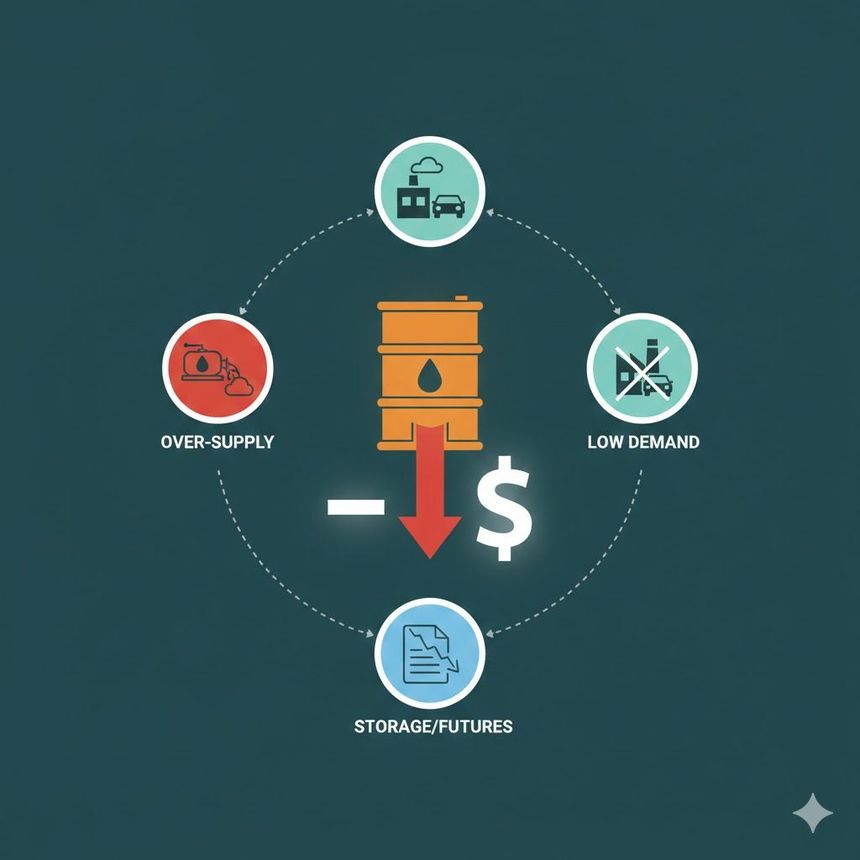
Why the oil (WTI contract delivery May) went in negative territory for the first time in its history.
To fully understand the reasons for this collapse, one must understand the functioning of oil futures contracts.
Oil futures are contracts on a « physical delivery » basis, that is, the person purchasing the contract contractually accepts delivery of a predetermined number of barrels to a location specified in the contract on the delivery date.
If one wishes to receive the barrels physically, one must keep the contract until its expiration and then become the owner of these barrels on the delivery date specified in the contract. If one simply wants to speculate on the rise in oil, one buys the contract and resells it before its maturity. Finally, if one wants to keep an exposure to the underlying asset, one will “roll the contract”. It implies selling the contract with an imminent expiration and buying another contract for a delivery date one or few months later, that’s what we call “roll » the contract. To do this, you need a counterparty who buys the expiring contract and sells a contract further on the forward curve.
For the WTI contract, the main delivery point is at Cushing. It is located in the « Permian basin ». It is in this area that the bottleneck has manifested itself most strongly. Under the influence of covid19 and the price war started by Saudi Arabia in the face of Russia’s refusal to curb its production, the market was flooded with oil at a time when demand was plummeting.
But what actually happened?
In the last hours of the contract’s life, the Cushing storage point is saturated, no more counterparty has storage space available and therefore no matter the price of oil, no counterparty wishes to buy the contract at imminent expiration, fault to be able to store the barrels that will be delivered there. Therefore, there is no longer a market to sell and roll the contracts. There are no more buyers, the system is seized up and the market is falling apart very quickly. The consequence: prices collapse sharply in negative territory. Without spare storage capacity, one cannot arbitrage the different existing contracts and restores balance on the market.
Concomitantly, several heavyweights in the futures market are looking to roll their recently accumulated long positions. Indeed, under the effect of the sharp fall in prices, speculators have invested heavily in index products over the past few days, notably in two index funds « OIL » and « USO », those two are very popular with non-institutional investors. These funds are unable to unwind and roll all of their positions accumulated over the past few days. This additional technical selling pressure will put the final nail on the coffin of this market, the WTI May delivery contract tanked -45 USD per barrel.
The WTI June delivery contract expired tuesday 19th of May without any price collapses this time. The sharp drop in US production and the concerted reduction in OPEC + that began in May have restored a precarious balance in the oil markets.
Obviously, these fluctuations have an impact on your hedging needs!

OUR TEAM SUPPORTS YOU
Kerius Finance brings together a team of passionate experts dedicated to analyzing, managing, and optimizing financial risks. Our approach is based on transparency, rigor, and attentiveness, enabling us to fully understand your challenges and provide tailored solutions.