Reflections on the evolution of gold prices
Reflections on the evolution of gold prices
Gold occupies a unique position in the global economy: it is simultaneously an industrial metal, a store of value, and at times a medium of exchange. This threefold nature explains both its volatility and its lasting appeal.
Gold has recently been described by some as a “Trump trade,” alongside cryptocurrencies and certain technology stocks. However, unlike cryptocurrencies, gold did not experience an immediate post-election surge. The symbolic USD 3,000 per ounce threshold was reached during the fading of these “Trump trades,” and prices have continued to rise since, suggesting that gold is driven by a deeper, more structural trend.
Several factors may exert sustained upward pressure on gold prices.
On February 7, China authorized certain large insurance companies to invest in gold as part of their medium- to long-term asset allocation.
Another key factor is the “de-dollarization” strategy pursued by some central banks. To protect themselves against potential US sanctions or a sharp depreciation of the US dollar, many countries are increasing their gold reserves at the expense of US Treasuries. This also provides them with a discreet yet effective lever in negotiations with the United States, by allowing them to reduce or even sell US Treasury holdings — which finance the US deficit — thereby weakening the dollar, pushing US interest rates higher, and mechanically increasing the interest burden on US debt.
Another noteworthy development is that representatives from Utah, among other US states, are working to authorize the use of gold and silver as legal means of transaction. This would partially de-dollarize the US economy without relying on cryptocurrencies. While this may seem surprising, proponents argue that since 1971 — the end of the dollar’s convertibility into gold, which opened the door to large-scale monetary expansion — real estate purchasing power has been significantly better preserved through gold ownership than through holding US dollars.
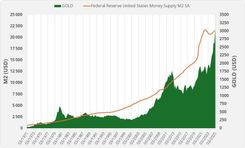
The chart below shows that recent increases in gold prices tend to follow, sometimes with a lag, the growth of the money supply. This expansion in money supply does not appear to be slowing.
For organizations structurally exposed to gold purchases for industrial purposes, the strategic takeaway is clear: although gold remains highly volatile and sensitive to geopolitical developments, its long-term trend is supported by a global desire to secure financial assets and, for governments and central banks, to strengthen monetary systems through the ownership of real assets that remain monetizable and can serve as backing for fiat currencies.

OUR TEAM SUPPORTS YOU
Kerius Finance brings together a team of passionate experts dedicated to analyzing, managing, and optimizing financial risks. Our approach is based on transparency, rigor, and attentiveness, enabling us to fully understand your challenges and provide tailored solutions.